Best virtual IBAN providers in 2026

Best overall for dedicated USD and EUR details: Moneyspace. Best for broader currency needs: Wise Business. Best for business spending controls: Revolut Business. Best for API-led payment operations: Airwallex. The best virtual IBAN provider in 2026 depends on whose name appears on the account details, which payment methods you need, and whether you qualify.
TL;DR
- Moneyspace is the best virtual IBAN provider here for freelancers needing dedicated EUR details alongside USD payment methods.
- Wise Business suits businesses that need currency coverage beyond USD and EUR.
- Revolut Business suits businesses combining international payments with team spending controls.
- Airwallex suits businesses connecting payment operations to software through APIs.
- Confirm eligibility, account ownership and SEPA support before sharing any IBAN with a client.
Why this matters
An IBAN is an international account identifier. It helps route a payment, but the identifier alone doesn't tell you who holds the account details, which transfers they accept, or what legal protections apply.
The term virtual IBAN also isn't a complete product specification. A provider can use individual IBANs to identify customers or reconcile payments within a wider account structure. That's different from giving you dedicated account details in your own name.
For your 2026 shortlist, start with the payment you need to receive. A freelancer collecting EUR invoices has different requirements from a business connecting payment workflows to its own software.
Choose the account structure first and the extra features second. A long feature list won't fix a mismatch between your invoice beneficiary and your receiving details.
What makes the best virtual IBAN provider?
Use these criteria before comparing providers:
- Account ownership: Confirm whether the beneficiary name is yours or your company's, rather than relying on a shared reference.
- Payment methods: Check incoming and outgoing support separately. EUR details don't automatically establish support for every transfer method.
- Eligibility: Check your country, legal entity type and business activity before starting verification.
- Total transaction cost: Review receiving, payout and exchange charges, including minimum fees. Compare the actual payment journey.
- Payment controls: Look for recipient checks, team permissions, authentication and payout tracking that match your workflow.
- Integration needs: Decide whether you need a usable account interface, accounting connections or an API. Don't choose an integration project for a straightforward invoicing problem.
These criteria also explain the order below. Dedicated details and practical payment operations come first; broader currencies, spending controls and software integration serve distinct needs.
Virtual IBAN providers at a glance in 2026
Each provider occupies a different use-case slot. Currency coverage, account details and access depend on the relevant product and jurisdiction.
| Provider | Best for | Standout capability | Key limitation or check |
|---|---|---|---|
| Moneyspace | Freelancers needing USD and EUR details | Dedicated details in your own name, with ACH, wire and SEPA payment methods | USD and EUR only; individual payout and monthly limits apply |
| Wise Business | Businesses needing broader currency coverage | Multi-currency payment and receiving features | Receiving details and payment methods vary by currency and location |
| Revolut Business | Businesses managing payments and team spending | International payment tools alongside spending controls | Business eligibility and account features depend on jurisdiction |
| Airwallex | Businesses integrating payment operations | Global Accounts, payouts and payment APIs | Requires a business-oriented selection process; receiving details vary by market |
No provider wins every category. Use the table to eliminate mismatches, then check the account structure and payment methods for your specific situation.
1. Moneyspace: best virtual IBAN provider for USD/EUR freelancers
Get dedicated EUR details with an IBAN/BIC and dedicated USD details with a routing and account number. Both are in your own name, rather than a shared reference. You can receive payments through ACH, wire and SEPA, exchange USD/EUR inside the account, and pay out through supported methods and destinations.
Moneyspace is the best virtual IBAN provider here for freelancers who need dedicated EUR details alongside USD payment methods. It's also relevant to agencies and businesses paying suppliers or teams across the two currencies.
Moneyspace pros:
- Verify once online for access to USD and EUR details, subject to approval.
- See the fee before confirming a payment.
- Follow payout status through Processing, On its way and Completed.
- Manage several companies and personal profiles under one sign-in.
Moneyspace cons:
- Only USD and EUR are supported.
- Individuals have a $10,000/€10,000 per-payout limit and a $50,000/€50,000 monthly limit.
- Payouts usually take 1–2 business days; don't plan around immediate delivery.
Pricing: Opening, verification and the monthly fee are free. Incoming ACH, wire and SEPA payments cost 0.5%. Outgoing ACH costs 0.5%, minimum $2; wire costs 0.5%, minimum $15; SEPA costs 0.5%, minimum €2. USD/EUR exchange costs 0.5%, minimum $1.
Business limits are $100,000/€100,000 per payout, with no monthly limit. Every payout, new recipient and team grant requires 2FA. Business verification uses KYB; don't apply individual ID-check timing to a company's application.
The product information above is dated October 26, 2026. Account details are provided through a licensed partner after verification. This service is not a bank.
Best for: Freelancers, contractors and small businesses collecting USD and EUR payments, especially those outside the US/EU who meet eligibility requirements.
Verdict: Buy for dedicated USD/EUR details; skip if you need other currencies.
2. Wise Business: best for broader currency needs
Wise Business combines multi-currency balances, currency conversion and international payments. Its receiving-detail features make it a relevant comparison when your business needs more than a USD/EUR workflow.
Start with your required currencies, then check the receiving details offered for your business location. Don't assume every supported balance includes local receiving details or identical transfer support.
Wise Business pros:
- Brings multiple currency balances into one business product.
- Combines receiving, conversion and outgoing payments.
- Fits businesses whose clients and suppliers use different currencies.
Wise Business cons:
- Receiving details depend on currency and location.
- A multi-currency product still requires checking each payment method separately.
- Business eligibility needs its own review; access to a personal product doesn't establish business eligibility.
Best for: Businesses with an established need for currency coverage beyond USD and EUR.
Verdict: Buy for broader currency requirements; hold until the required receiving details are confirmed.
3. Revolut Business: best for payments and team spending
Revolut Business combines business accounts, international payments and tools for team spending. It belongs on the shortlist when receiving client payments is only one part of your finance workflow.
Review the business product available in your jurisdiction. Account details, payment support and team features need to match the legal entity that will use them, not simply the country where a founder lives.
Revolut Business pros:
- Combines payment operations with business spending tools.
- Offers team-oriented account management features.
- Suits a comparison focused on both incoming revenue and employee spending.
Revolut Business cons:
- Business eligibility depends on jurisdiction and entity requirements.
- The available feature set needs a location-specific check.
- Spending tools don't establish whether a particular incoming payment method is supported.
Best for: Businesses that want international payments and team spending controls within the same product.
Verdict: Buy when spending controls are part of the requirement; hold until business eligibility is confirmed.
4. Airwallex: best for API-led payment operations
Airwallex offers business payment infrastructure, including Global Accounts, international payouts and APIs. It fits a business that needs payment operations connected to its own systems rather than handled entirely through manual account actions.
Check the receiving details available to your entity and the payout destinations your business needs. Then decide whether an integration solves an existing operational problem.
Airwallex pros:
- Provides APIs for building payment workflows into software.
- Combines business receiving capabilities with international payouts.
- Gives software-led businesses an integration-focused option to assess.
Airwallex cons:
- It's a business-oriented choice, not the default shortlist for a personal freelancer account.
- Account details and payment coverage require market-specific checks.
- An API workflow creates implementation work that a straightforward invoicing setup doesn't require.
Best for: Businesses with a defined need to connect payment operations to internal software or a platform.
Verdict: Buy for a clear integration requirement; skip API implementation when manual payments meet the need.
Check these details before opening an account
A provider name isn't enough to approve a payment workflow. Follow these steps before sending new receiving details to clients or changing supplier instructions.
Confirm eligibility
Check your residence, business registration and activity against the provider's current requirements. Apply using the legal person or entity that will actually receive the payments.
If you manage several companies, assess each company's requirements separately. One founder's access doesn't establish eligibility for every company they own.
Verify ownership
Check the beneficiary name and the explanation of how the account details are assigned. Ask whether the details belong to your profile or entity and whether a payment reference is essential for allocation.
Put the correct beneficiary information on invoices. Don't substitute a trading name without checking that it matches the receiving instructions.
Check payment methods
Match the payer's transfer method to the receiving instructions. For EUR payments, confirm SEPA support rather than treating an IBAN as proof of every possible transfer route.
For USD payments, distinguish ACH from wire. A payer's chosen method needs to match the details and instructions you provide.
Review payout controls
Check who can create recipients, approve transfers and view balances. Review authentication requirements before giving a colleague access.
Also decide how you'll handle payout status updates. A payment marked as processing isn't the same as a completed payment, so keep those stages separate in supplier communications.
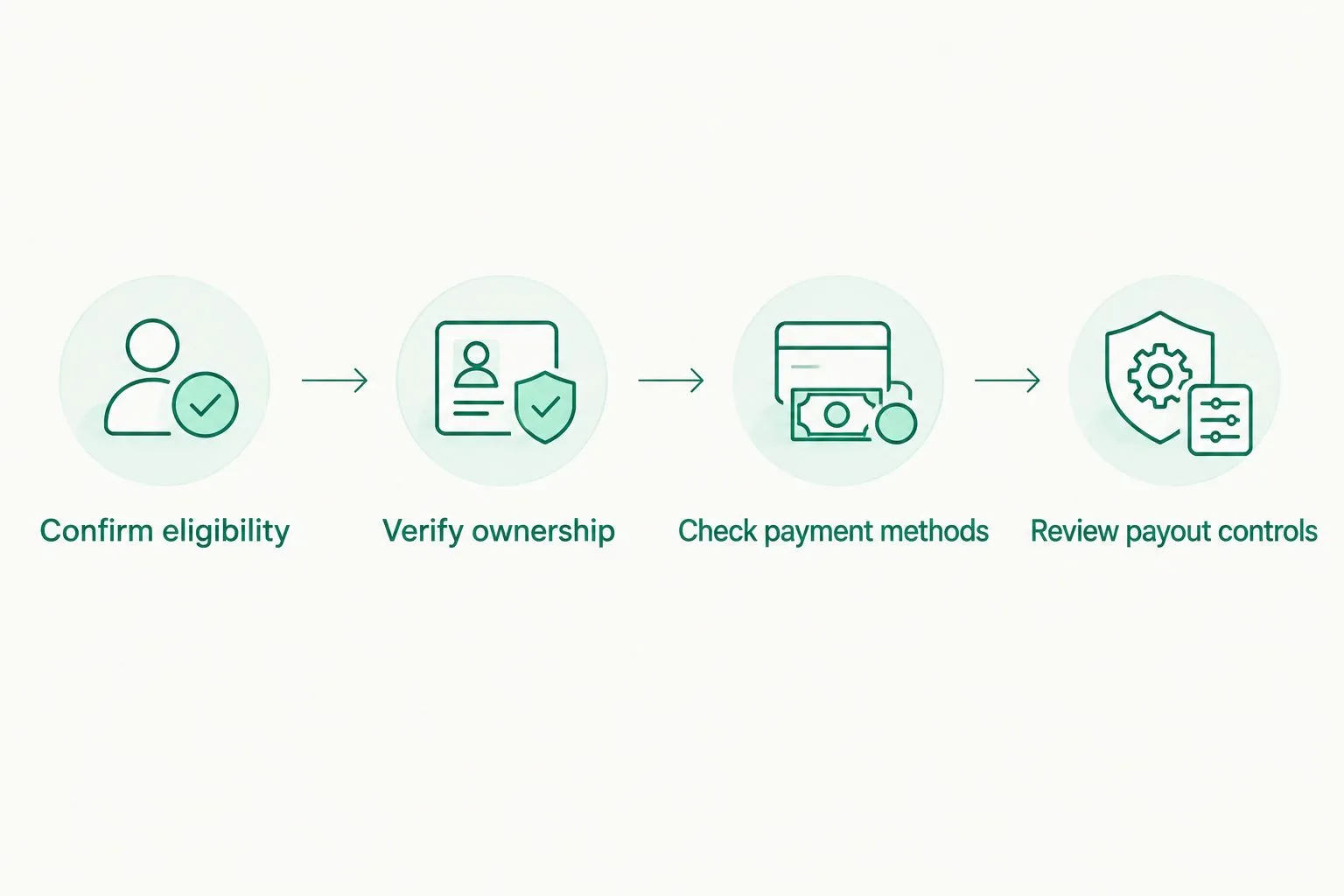
Confirm the account structure and payment methods before sharing receiving details.
A clean application and accurate receiving instructions solve different problems. Complete verification first, then check the payment instructions before distributing them.
Open an account
Get dedicated USD and EUR details in your own name, subject to verification and eligibility.
How the ranking works
This 2026 ranking puts dedicated USD/EUR receiving details first for the stated freelancer and small-business use case. Broader currency coverage, spending controls and APIs each receive their own recommendation rather than competing under one vague definition of “best.”
The criteria are account ownership, payment methods, eligibility, total transaction cost, payment controls and integration needs. The order isn't a claim that one provider accepts every applicant or delivers every payment faster.
Choose the narrowest product that covers your actual payment journey. Extra currencies and integration features matter when you need them, not simply because they're listed.
Which virtual IBAN provider should you choose?
For a USD/EUR freelancer workflow in 2026, start with dedicated details in your own name and confirm eligibility. Check incoming payment methods, outgoing limits and the full fee before making a decision.
Choose Wise Business when broader currency coverage is essential. Choose Revolut Business when team spending controls matter alongside payments. Choose Airwallex when payment integration is a defined business requirement.
Don't switch just to obtain an IBAN. Switch when the account structure, receiving methods or operating controls address a specific problem with your current setup.
FAQ
What's the best virtual IBAN provider for a freelancer?
For a freelancer collecting USD and EUR, prioritize dedicated details in your own name and support for the client's payment method. Confirm country eligibility, payout limits and transaction minimums before applying.
Is a virtual IBAN the same as dedicated account details?
Not necessarily. A virtual IBAN can identify payments within a wider account structure, so confirm the beneficiary name and whether the receiving details are dedicated to you or your company.
Can I receive SEPA payments with a virtual IBAN?
You can receive SEPA payments when the provider explicitly supports SEPA for those details. An IBAN alone doesn't establish every supported incoming or outgoing payment method.
Is Wise Business better than Revolut Business?
Wise Business is the more relevant starting point for broader currency requirements; Revolut Business is the more relevant starting point for payments combined with team spending controls. Confirm the features available to your business jurisdiction before choosing.
Do I need a business account to receive freelance payments?
Use the account type that the provider permits for your legal status and activity. Being a freelancer doesn't automatically establish eligibility for either a personal or business product.
Can I get an IBAN if I live outside Europe?
Eligibility depends on the provider, your country and your legal status. A service aimed at international customers doesn't establish universal approval or access in every country.
How do I compare virtual IBAN fees?
Compare the full payment journey: receiving, currency exchange and payout. Include minimum charges and check the fee for your actual transfer amount rather than comparing headline percentages alone.
One last thing
Check the beneficiary name before sending your first invoice with new account details. A valid IBAN doesn't tell your client which name to enter or whether a reference is required.
Keep receiving instructions as a separate, checked document. Update that document when details change instead of copying information from an old invoice.